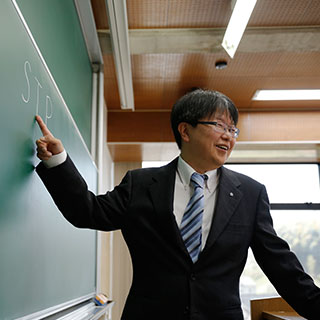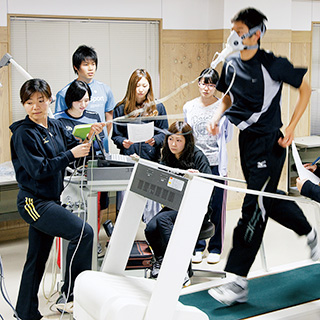


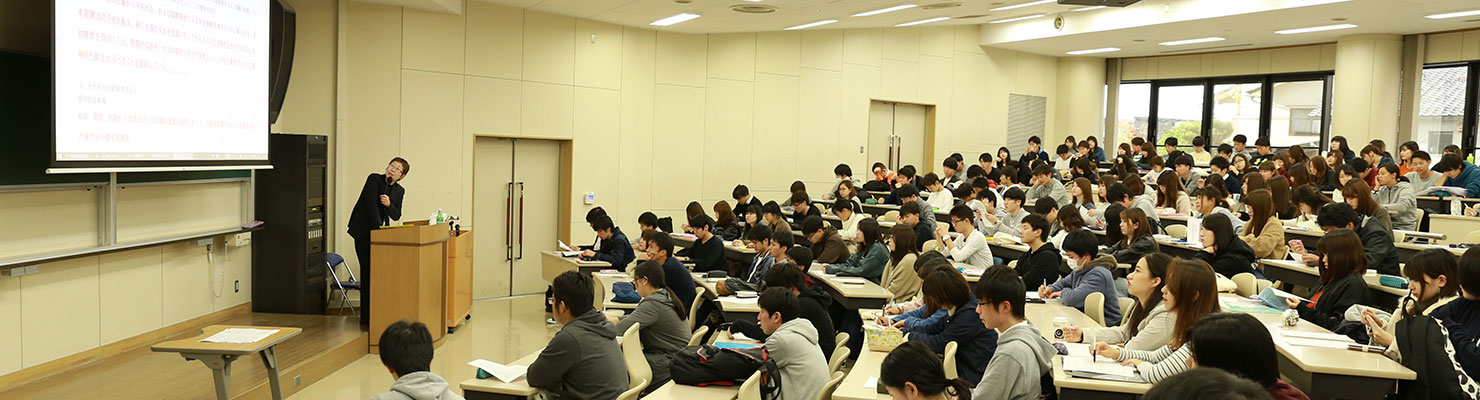
We foster future business professionals who are equipped with theoretical and practical skills required by society
The Department of Economics aims to nurture individuals who, based on the basic knowledge acquired up to high school, are interested in various economic issues and can apply this knowledge to society by learning practical specialized knowledge. The Department of Economics curates courses in stages from introductory to advanced levels so that students can steadily learn even if they have no prior knowledge of economics, and cultivate the ability to make use of economics in various social situations.
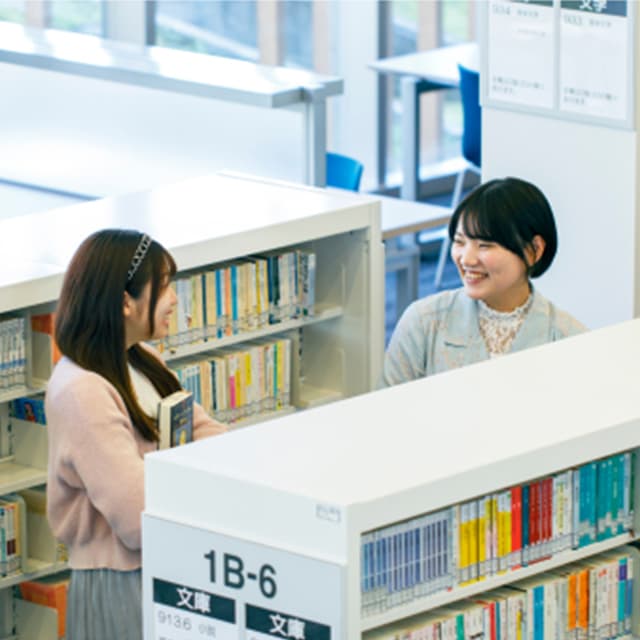
Many graduates of the Department of Economics contribute to the region as business professionals working locally. For this reason, the Department offers a number of courses that allow students to study the region from an economic and policy perspective (regional policy theory, regional economics, urban economics, etc.). The program is designed to meet the needs of students with a strong local orientation and to help them acquire the ability to understand and analyze various issues in contemporary regional economics and society.
Economics involves the use of a great deal of data and materials, and we offer courses (e.g., Economic Mathematics I and II) that carefully instruct students from high school-level mathematics. In addition, we also offer courses (Economic Statistics, Econometrics, etc.) in which students learn how to read and analyze statistical data useful in the business world so that they can explain events that occur in the economy based on data and materials, and learn knowledge, skills, and theories that are useful in an information-saturated society.

We foster the next generation of leaders who can utilize diverse knowledge from a management perspective
Students acquire basic knowledge of the structure of management in business as well as the structure and functions of companies and society. We also offer a curriculum for acquiring qualifications that will be useful in business in the future, as well as practical training courses overseas. By studying specialized knowledge in a variety of fields according to the learning program, we develop human resources with the practical skills required by companies.

Based on the acquisition of common subjects, we have an academic program to enhance expertise in the three areas of “management,” “accounting,” and “law”. Students learn a wide range of knowledge from a variety of specialized subjects, while at the same time cultivating a perspective that can adapt to a rapidly changing global society, and cultivating the ability to apply the knowledge and abilities acquired in any career path.

In seminar activities, students tackle issues in “management,” “accounting,” and “law,” among other themes. Students identify issues in local communities from a managerial perspective and attempt to solve them from multiple perspectives, including product development and marketing of local products and local revitalization through events, and through this process cultivate the qualities of a working adult.

Cultivate comprehensive knowledge and practical skills to uncover the region’s ‘appeal’ and generate its ‘vitality’
By selecting courses from the three areas of “Regional Economy and Regional Data Analysis,” “Public Policy,” and “Tourism and Regional Management,” students acquire a wide range of specialized knowledge necessary for understanding regional issues, including economics, policy, regional culture, history, society, welfare, environment, and tourism. Students learn analytical methods using data science and acquire the ability to contribute to solving regional issues with a broad perspective, complex knowledge, and education. They will be trained to become next-generation leaders who will serve as the backbone of the region in a variety of fields, including public service, financial institutions, tourism and travel industry, trading companies, and think tanks.
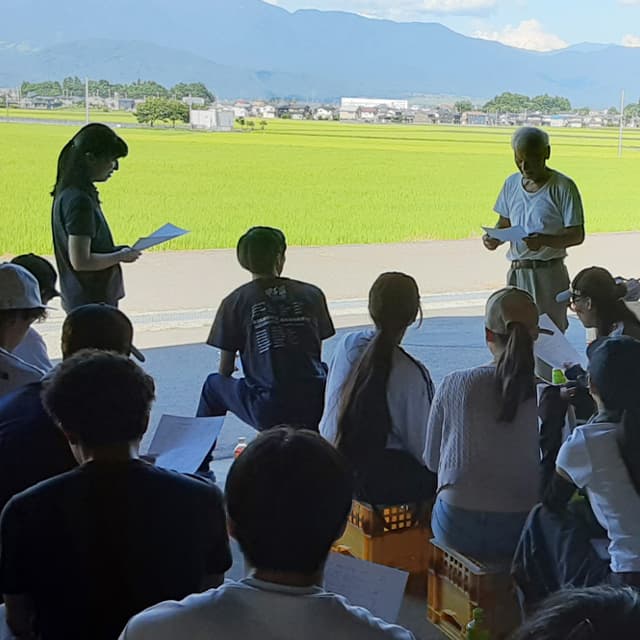
In order to discover regional issues and link them to solutions, the department emphasizes practical education to acquire the basic knowledge and abilities to ethically collect and analyze diverse information by combining research methods in related academic fields and information and communication technology (ICT), to accurately discover regional trends, potential values, and issues, to make appropriate judgments, and to effectively use information to respond to digital transformation of the region. The department emphasizes practical education to help students acquire the basic knowledge and abilities to respond to digital transformation of the region. In addition, as a department that plays a central role in industry-academia-region collaborative activities, the department will promote educational activities based on collaboration with the “SDGs Industry-Academia-Regional Collaboration Center” by utilizing the social research skills and DX skills acquired by students.

With Kanazawa—a creative, historical, and cultural city—as the main field of study, students learn the basics of fieldwork while collaborating to proactively discover local issues and explore solutions. The “Basic Fieldwork Exercise,” a course to develop human resources equipped with both specialized ‘knowledge’ related to the region and ‘skills’ such as independence and collaboration, is designated as a required subject in the department. Students develop practical and problem-solving skills through a repeated cycle of classroom lectures and practical trainings, working consistently to identify, analyze, and solve regional issues.
10-1 Ushi, Gosho-machi, Kanazawa-shi, Ishikawa, 920-8620, Japan
TEL : 076-253-3896 (International Exchange Center)
TEL : +81-76-253-3896 (From outside Japan)
FAX : +81-76-253-3617 (From outside Japan)